


Premium Paper-Based Cat Litter
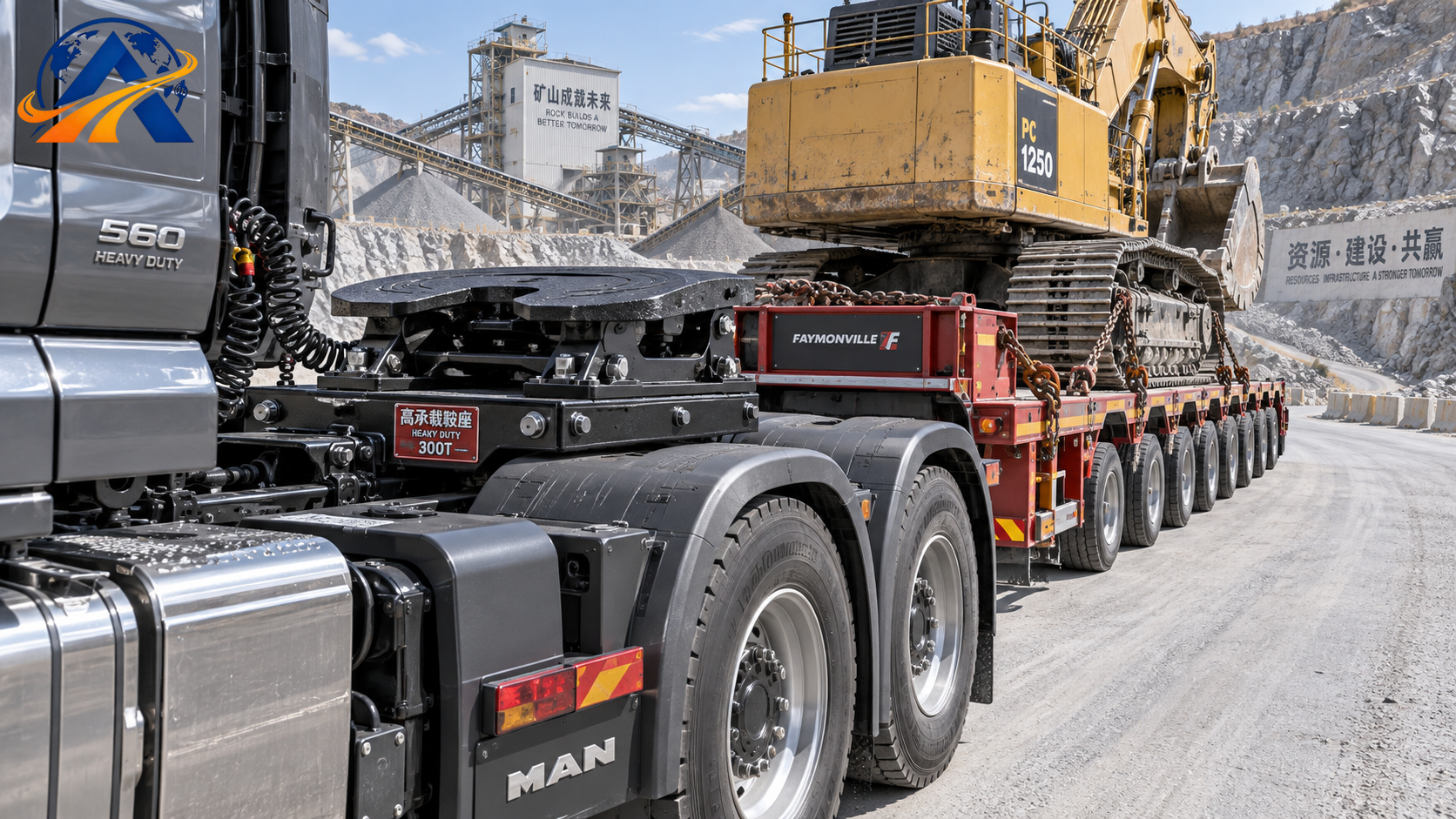
A truck tractor needs a higher fifth-wheel capacity when the trailer’s kingpin load, the severity of the duty cycle, or the forces created by the operating environment approach the rating of the installed coupling. Gross combination weight matters, but it is not enough to determine suitability. Fifth-wheel selection starts with the vertical load imposed by the trailer and must also account for the tractor frame, mounting arrangement, axle ratings, and the coupling’s approved operating conditions.
For a technical evaluator, the practical trigger is simple: if the expected kingpin load or application conditions leave little margin below the fifth-wheel rating, the standard-duty unit may be the wrong choice. A higher-capacity fifth wheel is generally justified before the vehicle enters service, not after wear, instability, or mounting damage appears.
Start with kingpin load, not trailer GVW alone
The fifth wheel carries the vertical portion of trailer weight transferred through the kingpin. That load can differ substantially between trailers with a similar gross vehicle weight. A properly configured highway semi-trailer may transfer a predictable share of its weight to the tractor, while a short, heavy construction trailer or a trailer with equipment concentrated near the front can impose a much higher kingpin load.
This is why a truck tractor should not be matched to a fifth wheel using gross combination weight alone. The evaluation should establish the maximum loaded kingpin weight for the actual trailer configuration, including variations in cargo position, body type, and loading method. A low-bed trailer, tanker, bulk body, logging trailer, or specialized equipment carrier may create a different vertical-load profile from a conventional dry-freight trailer.
A higher-capacity fifth wheel is appropriate when the maximum expected vertical load is near the standard unit’s stated limit, particularly where loading conditions are not tightly controlled. The rating must cover the loaded operating condition with an adequate application margin, rather than merely matching a nominal trailer specification.
Severe duty can require more capacity even when static load appears acceptable
Static kingpin weight is only one part of the load case. Fifth wheels are exposed to repeated longitudinal, vertical, and torsional forces as the tractor brakes, accelerates, turns, crosses uneven ground, or operates on grades. These forces become more severe in construction, quarry, forestry, mining, port, and mixed on-road/off-road work.
A fifth wheel that appears adequate for a paved-road operation can be unsuitable when the same trailer is used on rough access roads or at job sites. Ruts, cross-axle articulation, sharp ramps, uneven loading areas, and repeated low-speed maneuvering can increase shock loading through the coupling and its mounting structure. Frequent coupling and uncoupling also raises the importance of lock durability, lubrication, wear control, and inspection access.
In these applications, a higher-capacity fifth wheel may be selected for its higher vertical-load rating, but also for its more robust construction and approved duty classification. Capacity alone should not be treated as a universal measure of durability. The evaluator should confirm that the specific fifth-wheel model is approved for the intended use, including any off-road or severe-service restrictions stated by its manufacturer.
The tractor installation must support the higher-rated coupling
Installing a higher-capacity fifth wheel does not automatically increase the capacity of the truck tractor. The coupling, top plate, mounting brackets, slider or fixed mounting system, chassis frame, rear axles, suspension, tires, and legal axle-load limits must form a compatible system.
For example, raising fifth-wheel capacity does not solve an overloaded drive axle. A trailer with a high kingpin load may require a different axle configuration, wheelbase, suspension rating, or fifth-wheel position to distribute weight correctly. Moving the fifth wheel can shift load between the steering axle and drive axles, but it can also affect turning clearance, trailer-to-cab clearance, and frame loading. A sliding fifth wheel adds flexibility for axle-load adjustment, while a fixed installation may be preferable where a defined trailer position and higher structural rigidity are required.
Technical review should therefore include:
- Maximum loaded kingpin weight and foreseeable cargo-position variation.
- Fifth-wheel vertical-load rating and its approved duty category.
- Trailer gross weight and the coupling system’s applicable drawbar or dynamic-load rating.
- Drive-axle, steering-axle, suspension, wheel, and tire load limits.
- Frame reinforcement, mounting-bracket capacity, and slider rating where fitted.
- Fifth-wheel location, axle-load distribution, cab clearance, and trailer swing clearance.
Common situations that justify an upgrade
A higher fifth-wheel capacity is commonly warranted when a truck tractor will pull heavy low-bed or machinery trailers, bulk or tanker trailers with substantial front loading, multi-axle specialized trailers, or trailers used in severe terrain. It may also be needed when the tractor is being repurposed from standard line-haul work to construction or heavy-haul service.
Another frequent trigger is operational uncertainty. Where a tractor will work with several trailer types, travel across markets with different loading practices, or handle cargo whose center of gravity changes from load to load, selecting only to the lowest anticipated condition can leave too little tolerance. The correct decision is still based on the defined maximum operating case, not on the heaviest-looking trailer in the fleet.
Do not confuse a larger fifth wheel with a complete heavy-haul specification
A higher-capacity coupling can reduce the risk of premature wear, lock damage, mounting fatigue, and unstable load transfer, but it does not replace a full combination assessment. Kingpin size and condition, trailer coupling plate design, lubrication practice, lock adjustment, and regular inspection remain relevant. Wear at the jaws, kingpin, plate, brackets, or slider can change how loads are transmitted long before a visible failure occurs.
The sound selection process is to define the maximum kingpin load, identify the most demanding route and duty cycle, then verify every load-bearing element of the tractor-trailer combination against that condition. When the standard fifth wheel is close to its limit or the work includes significant shock and articulation, a higher-capacity unit should be treated as part of a matched heavy-duty configuration rather than an isolated upgrade.
Search
Send Us A Message