


Premium Paper-Based Cat Litter
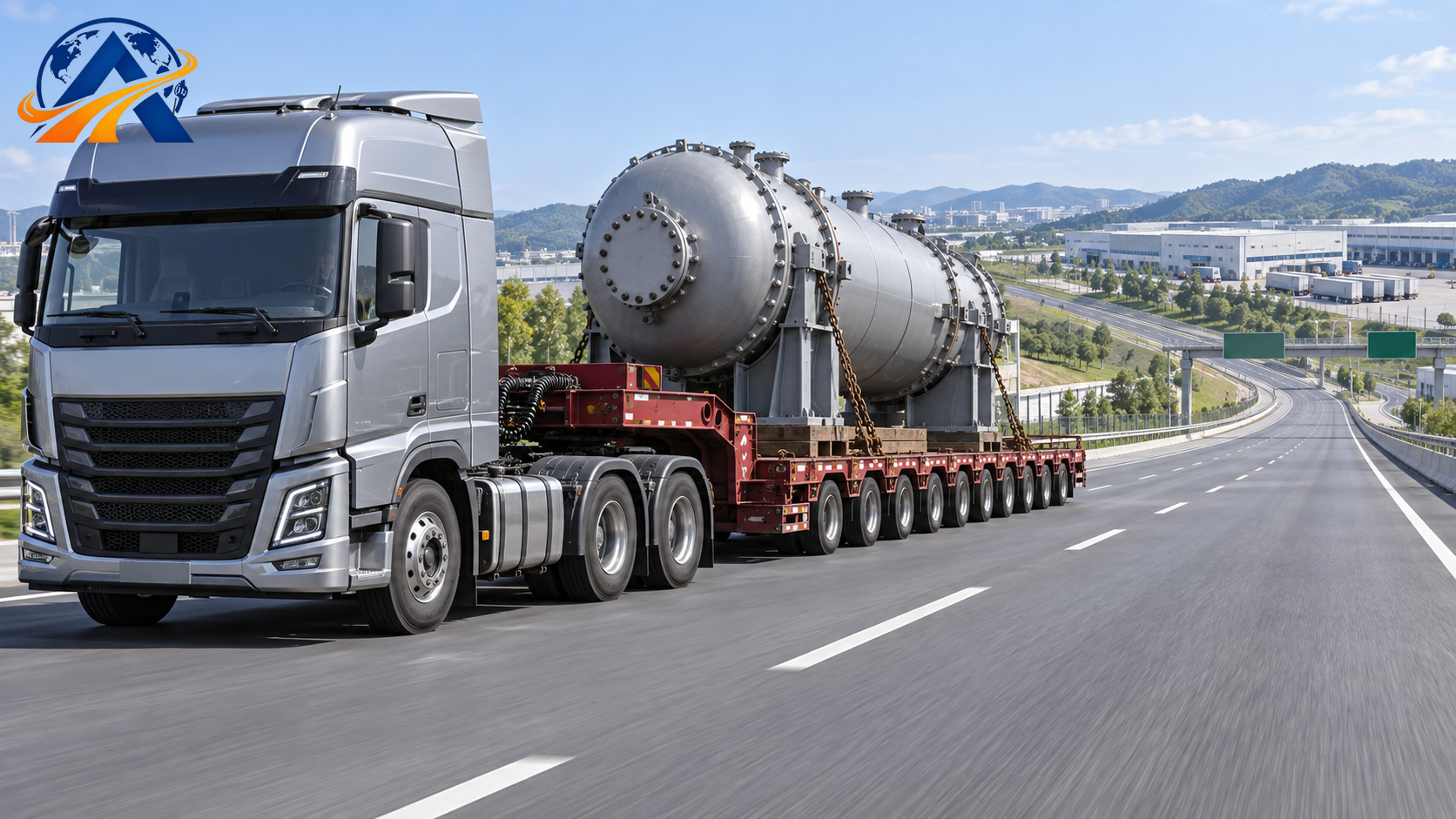
Long-haul truck sizing begins with a simple but frequently misapplied calculation: the usable payload is not the truck’s advertised towing capacity. It is the lowest allowable value created by the vehicle’s gross combination mass rating (GCWR), axle ratings, trailer ratings, tyre limits, coupling capacity, and the legal mass limits on the intended route.
A tractor may be technically capable of pulling a heavy trailer, yet still be unsuitable if the combination exceeds a bridge formula, a drive-axle limit, a permit threshold, or the trailer’s certified gross vehicle weight rating. For project transport, that mismatch can lead to rejected loads, underutilised equipment, rescheduling, or the need to split deliveries after mobilisation has already begun.
Calculate payload from the complete combination
The starting point is the expected operating weight, not the nominal cargo weight. A practical sizing calculation is:
Available payload = lowest permitted combination mass − actual tractor and trailer tare weight − fuel, driver, equipment, and operational allowances.
The “actual” tare weight matters. Published chassis weights often exclude items that are essential in project work: sleeper cabs, extra fuel tanks, hydraulic systems, PTO equipment, bull bars, spare wheels, toolboxes, refrigeration units, load restraint equipment, or auxiliary power systems. Trailer tare weight can also vary substantially between a standard flatbed, low-loader, walking-floor trailer, tanker, or insulated van.
Fuel should not be treated as negligible on long routes. Large-capacity tanks improve range and reduce dependence on refuelling availability, but they consume part of the payload allowance. The same applies to chains, dunnage, tarpaulins, ramps, and lifting accessories. Where loads are close to the legal limit, these items should be entered into the weight schedule rather than left as a contingency.
For dense cargo such as steel, aggregates, machinery components, or packaged cement, axle distribution can limit payload before the gross combination limit is reached. A load positioned too far forward can overload the tractor drive axles; too far rearward can overload trailer axles or reduce steering-axle loading. The relevant question is therefore not only “How many tonnes can the combination carry?” but also “Where will those tonnes sit throughout loading, braking, climbing, and unloading?”
Match axle configuration to route and load geometry
Axle count is a compliance and stability decision, not merely a capacity upgrade. A 4×2 tractor may suit relatively uniform freight within moderate combination weights, while 6×2, 6×4, or multi-axle tractor arrangements provide different trade-offs in traction, axle loading, manoeuvrability, tare weight, and tyre wear.
A 6×4 configuration is often selected where poor surfaces, access roads, steep grades, or construction sites require sustained traction. Its additional driven axle can improve site access, but it also adds weight and operating cost. A 6×2 configuration may offer a useful payload advantage on paved long-haul routes, provided traction requirements and local axle-load rules are compatible with the operating plan.
Trailer axle spacing, lift axles, steering axles, and suspension type require the same scrutiny. More trailer axles can distribute mass more effectively, but they can increase tyre scrub in tight turns and may complicate access to constrained sites. For abnormal or indivisible loads, the intended route must be assessed for turning radii, bridge capacities, overhead clearance, grade, and any permit conditions before selecting a low-loader or modular trailer arrangement.
Size engine and drivetrain for the hardest recurring route segment
Engine power should be based on the route’s sustained demand, especially gradients, altitude, ambient temperature, road surface, and target journey time. Selecting power solely from the legal combination weight can produce poor performance on long climbs or frequent stop-start sections. Conversely, specifying maximum horsepower for a flat, regulated motorway route may add fuel consumption and acquisition cost without improving project output.
Torque curve, transmission ratios, final drive ratio, and cooling capacity are as important as peak horsepower. A heavy combination operating in high ambient temperatures or on long grades needs sufficient cooling reserve and a drivetrain that can hold an appropriate gear without excessive shifting. Retarder or engine-brake capability should also be reviewed where descents are frequent, because service-brake heat management affects both safety margins and trip consistency.
For a route that includes both paved highway and site access, it is useful to distinguish between the “road combination” and the “site combination.” The truck must be able to perform on both. A vehicle optimised for motorway fuel economy may lose productive time if it cannot reliably enter a muddy laydown area, climb an unsealed haul road, or manoeuvre under load at low speed.
Check the tractor–trailer interface before approving the specification
Fifth-wheel capacity, kingpin rating, fifth-wheel height, landing-leg clearance, electrical connectors, air-brake connections, and hydraulic requirements must align with the trailer selected. Incompatible fifth-wheel heights can create poor trailer attitude, insufficient ground clearance, or axle-load imbalance. A tractor configured for a standard semitrailer may not be suitable for a low-bed trailer with a high kingpin load.
Coupling load deserves particular attention. The imposed load on the tractor must remain within the fifth-wheel and drive-axle ratings while maintaining enough steering-axle load for stable handling. This is especially important where cargo position changes, such as equipment carried on detachable gooseneck trailers or loads secured at different points on a deck.
Build capacity around delivery reliability, not maximum paper payload
The best-sized heavy-duty truck is rarely the one that reaches the highest theoretical payload on a specification sheet. It is the combination that can carry the planned load legally, maintain acceptable performance on the actual route, enter the delivery site, and remain serviceable throughout the project schedule.
A useful approval package should include a route-specific weight sheet, tractor and trailer tare assumptions, axle-load calculations for representative cargo positions, coupling ratings, and confirmation of applicable local mass and permit requirements. It should also identify the operational reserve needed for fuel, load restraint, weather-related route changes, and site-access limitations.
Where project deliveries are critical-path activities, a small margin in payload and drivetrain capability can be more valuable than chasing the lowest acquisition cost. The cost of an under-sized unit is not limited to slower transport; it can affect crane bookings, installation sequencing, labour utilisation, and the availability of downstream work fronts. Proper sizing of Heavy Duty Trucks therefore means designing a transport combination around the real operating envelope, not the best-case load.
Search

Send Us A Message